
Hernia Surgery
Laparoscopic Hernia Surgery
About Hernia & Types of hernia surgery
A hernia occurs when the internal organs, tissues, muscles, or fat pushes through a weak spot in the abdominal muscle wall. Most hernias develop within the abdominal cavity, i.e., between the chest and hips. Hernias usually are not considered dangerous, but they tend to get bigger and lead to life-threatening complications
It can occur in both males and females. Some common types of hernias are:
Inguinal Hernia: It is the most common type of hernia that appears in the groin region when a part or section of the intestine or bladder pushes through the abdominal wall or into the inguinal canal. This type of hernia mostly occurs in males
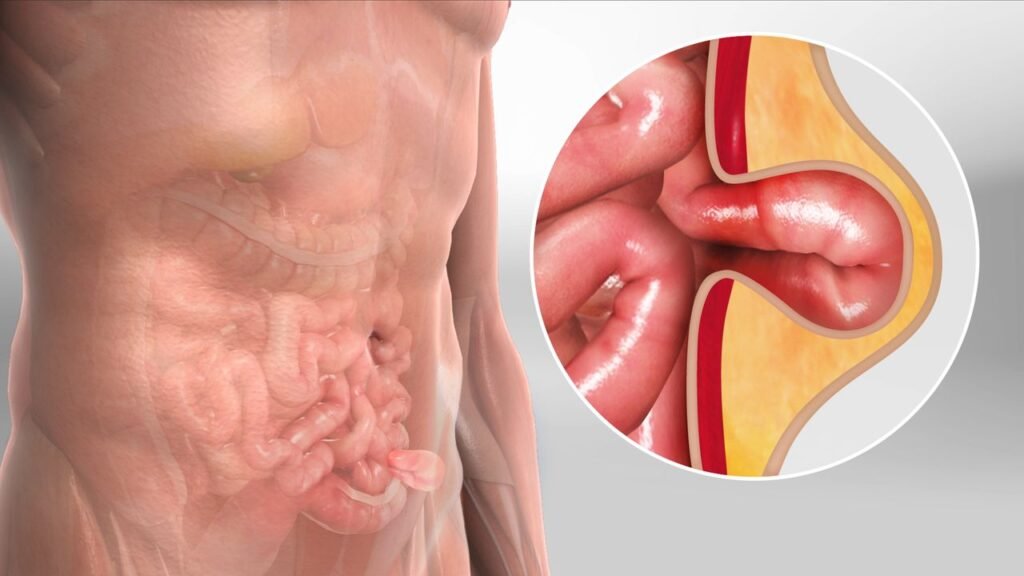
- Umbilical Hernia: In this type of hernia, the intestine protrudes through the weak abdominal muscles around the navel or belly button. It mostly develops in infants and often resolves within a year or so. Adult males and females can also develop this hernia.
- Hiatal Hernia: A hiatal hernia develops when the opening in the diaphragm, where the esophagus passes through, widens, and the stomach pushes through this opening, creating a bulge in the chest.
- Femoral Hernia: This type of hernia occurs when the internal organs or tissues push through the groin around the femoral artery present in the upper thigh region. A femoral hernia most develops in females.
- Incisional Hernia: Also known as ventral hernia, an incisional hernia develops in the area of a previous surgical incision where the intestine or other organs push through the weak scar tissue in the abdominal wall
Other types of hernia include epigastric hernia, spigelian hernia, congenital diaphragmatic hernia, perineal hernia, etc. Hernias often cause discomfort, pain, and a visible bulge in the affected area. They can be left untreated initially but need to be monitored properly. However, if the condition progresses, surgical hernia repair is required to prevent complications and alleviate symptoms.
Diagnosis & Evaluations Before Laparoscopic Hernia Surgery
Diagnosing a hernia involves identifying its severity through a combination of physical exam, medical history review, and imaging tests and determining the most suitable approach for hernia repair. The initial evaluation process involves the following:
- Physical Exam: The Surgeon will palpate the affected area to look for signs of a hernia, such as a bulge or a lump. The patient may be asked to cough or strain, which can make the hernia more noticeable. During the physical exam, the Surgeon may also try to gently push the hernia back into place to see if it is reducible(it can be pushed back into the abdominal cavity through the opening). This helps to determine the severity of the hernia and whether surgery is needed.
- Medical History: The patient needs to provide a detailed medical history, including when the symptoms started and the factors that aggravate the pain and other symptoms. The Surgeon may also ask if the patient has had any previous surgeries. Other questions may also be asked about the patient’s overall health, age, and existing medical conditions.

After the assessment, the Surgeon may recommend several imaging tests to confirm the diagnosis and plan the surgery accurately. Some common hernia tests include the following:
- Ultrasound: This test uses sound waves to create images of internal structures. It helps to determine the size and location of the hernia along with the contents of the hernia sac.
- CT Scan: A computed tomography scan provides detailed cross-sectional images of the affected area to identify the type of hernia, its size, and whether the surrounding structures are affected by it.
- MRI (Magnetic Resonance Imaging): This test provides detailed images of the soft tissues and helps to evaluate the extent of herniation.
Besides these imaging tests, some additional tests, such as pulmonary function tests, cardiac evaluation, ECG/EKG, etc., may also be done to ensure that the patient is in optimal health. The results of these tests and evaluations allow the surgeon to identify the potential risks and complications of surgery and the safest approach for hernia repair.
Treatment Options for Hernia
The various management and treatment options for hernia include the following:
- Watchful Waiting: For small, symptomatic hernias, a “wait and see” approach is recommended, which involves regular monitoring of the bulge to ensure it doesn’t become larger or more problematic. It is preferred in elderly patients with multiple health issues.
- Lifestyle Modifications: Making certain lifestyle changes can also help to manage hernia symptoms, especially hiatal hernias. These may include avoiding large meals, staying upright after eating, etc.
- Medications: The Surgeon may prescribe over-the-counter or prescription medications to alleviate the symptoms associated with hernias, such as acid reflux or heartburn.
- Support Garments: For some individuals, the Surgeon may recommend wearing a hernia truss or support garments to push back the bulging organ in the abdominal cavity. However, it is not a long-term solution, and patients should not use them without consulting a Surgeon .
- Hernia Repair Surgery: Surgical repair for hernia is mostly recommended when the condition is symptomatic and there are significant risks of developing complications. The primary goal of surgery is to push back the protruding organ or tissue into its proper place. In most cases, the abdominal wall is strengthened using a hernia mesh, which also helps to prevent hernia recurrence.
Surgical Techniques for Hernia Repair
There are two types of hernia surgery (hernia surgery name): one is herniorrhaphy (tension repair), and the other is hernioplasty (mesh repair). Herniorrhaphy refers to repairing the abdominal wall without any support. Hernioplasty refers to repairing the wall with the help of hernia mesh which acts as a reinforcement. Nowadays, in most cases, hernioplasty is performed to repair hernias, and this approach is also called tension-free hernia repair.
Surgery on Hernia can be performed using the following techniques:
- Open Hernia Surgery: This is a standard technique for Laparoscopic Hernia Surgery where the surgeon makes an incision in the skin to access the herniated tissues and places them back in the abdominal cavity. Once the repair is done, the surgeon stitches the edges of the healthy tissues together to close the opening in the abdominal wall. A more common approach involves placing a synthetic mesh over the weakened area of the abdominal wall to provide support and prevent recurrence. The mesh is sewn in place or secured with surgical staples
- Laparoscopic Hernia Surgery: In laparoscopic hernia operations, the surgeon may take a totally extraperitoneal (TEP) or transabdominal preperitoneal (TAPP) approach. In TEP, the hernia is repaired from outside the wall without entering the peritoneal cavity. In the transabdominal approach, the surgeon enters the peritoneal cavity and places a mesh inside to reinforce the abdominal wall. Both these approaches are minimally invasive as only keyhole-sized incisions are created to access the hernia, and a laparoscope is used, which provides live, high-quality video feed of the internal organs. This technique has minimal complications and higher success rates than open hernia surgery.
- Robotic Hernia Surgery: This technique is quite similar to laparoscopic hernia surgery, but instead of performing the surgery directly, the surgeon uses robotic arms for enhanced dexterity and precision. The robotic technique is very helpful in treating hernias in children
Each surgical approach has its advantages and considerations. The choice of technique depends on the type of hernia, the surgeon’s expertise, and the patient’s preference.